
How studying a Wits Postgrad Diploma in Public Management online works
Learn what to expect when studying a Postgrad Diploma in Public Management online, including support, weekly workload and tips to succeed while working.
Read More
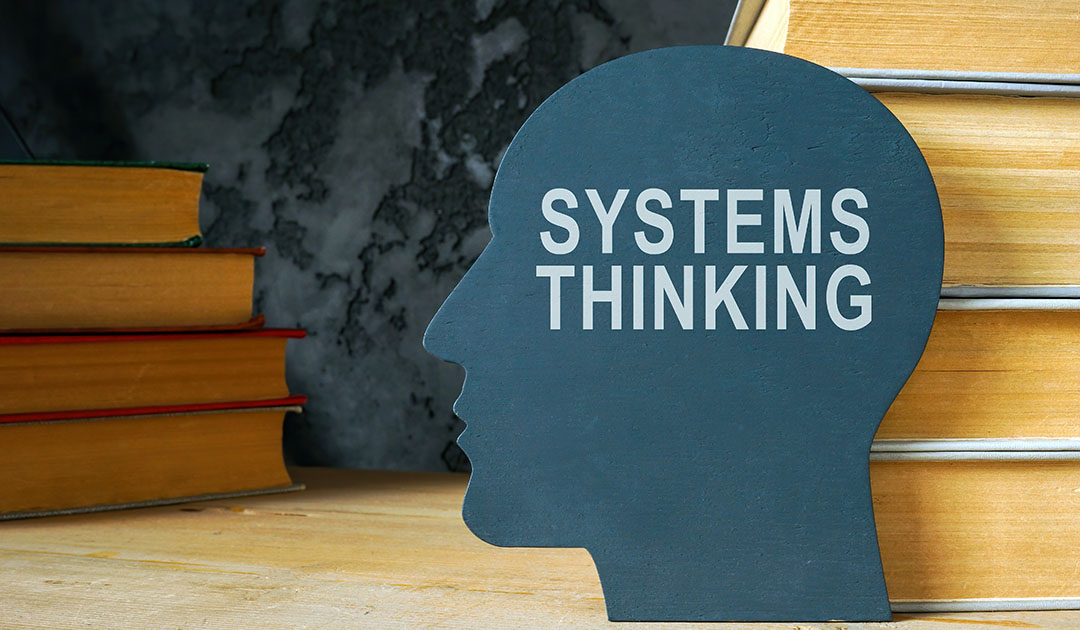
In nursing, we are trained to treat the patient in front of us. If a patient is in pain, we administer analgesics. If a wound is infected, we dress it. This is linear thinking, where you encounter a problem and provide a solution.
But what happens when the pharmacy is out of analgesics because of a budget freeze? What if the wound is infected because the patient was discharged too early due to a bed shortage?
This is where systems thinking enters the picture. It moves beyond the immediate symptom to examine the complex web of causes such as workflows, economics, infrastructure and policy that created the problem. The Bachelor of Health Sciences in the field of Nursing Systems Science (BHSciNSS) at Wits University is designed to teach you this exact mindset.
To illustrate the power of this qualification, let’s look at three hypothetical case studies that mirror the daily reality of South African healthcare, comparing a traditional response to a systems science response.
The scenario: The emergency department is in crisis. Ambulances are diverted because every bay is full. The emergency staff are exhausted, blaming the ward nurses for not coming to collect patients fast enough.
The traditional approach: The nursing manager shouts at the ward staff to "hurry up" and demands faster discharges, compromising patient safety and increasing staff burnout.
A nurse trained in Coordinating Community Care and Environmental Health (focusing on the physical care environment) analyses the flow. They realise the bottleneck isn't the emergency department or the ward; it’s the discharge process. Patients are medically fit for discharge but are waiting for medicine scripts or family transport.
The scenario: Mr X, a diabetic patient, is readmitted for Diabetic Ketoacidosis for the third time in six months. The staff labelled him "non-compliant".
The traditional approach: The staff educate Mr X again on diet and insulin, treating the acute episode and sending him home with the same instructions.
A nurse trained in Evidence-Based Practice and Healthcare Economics investigates the root cause. They discover that Mr X understands the diet but cannot afford the specific healthy foods recommended and the local clinic runs out of insulin strips by the 15th of the month.
The scenario: A junior nurse administers the wrong medication during a busy night shift.
The traditional approach: The nurse is disciplined, retrained and watched closely. The blame is placed entirely on the individual.
A nurse trained in Patient Safety and Quality Management conducts a root cause analysis. They find that the packaging of two different drugs looks nearly identical and that the lighting in the medication room is poor. Furthermore, the nurse was interrupted three times during preparation.
These scenarios are not just stories; they are the curriculum.
The Wits BHSciNSS moves you away from rote learning and towards critical analysis. Through modules like Clinical Judgement and Healthcare Law and Policy, you learn to dissect these complex layers. You learn that "fixing" a problem in healthcare rarely means working harder; it means designing a system that works smarter.
By graduating with this degree, you become the person in the room who sees the invisible connections - the leader who solves the problem once, for everyone.
RCA is a method used in systems thinking to identify the underlying cause of a problem. Instead of looking at the immediate trigger (such as "the nurse slipped"), it keeps asks "Why?" until it finds the systemic flaw (such as "the floor was wet because the drain is blocked because maintenance has no budget").
Systems thinking relies on the understanding that healthcare is a team sport. The programme includes modules like Coordinating Community Care and Professional Practice and Development, which teach you the language and priorities of other stakeholders (pharmacists, finance managers and social workers), enabling you to lead diverse teams effectively.
It is critical. The public sector faces severe resource constraints. Systems thinking is the most effective tool for doing more with less. By eliminating waste, improving patient flow and preventing errors, systems-trained nurses are invaluable assets to public hospital management and improving the country's health outcomes.
Yes. The BHSciNSS uses problem-based learning. Assessments often involve analysing real-world or simulated healthcare scenarios, identifying the systemic failures, and proposing evidence-based solutions that use the theories you will have learned in modules like Healthcare Economics and Quality Management.
Yes. The Environmental Health module isn't just about waste management; it’s about how the facility acts as a workplace and a place of healing. Nurses are often the ones who notice that the emergency trolley is too far from the beds or that the isolation room workflow causes cross-contamination. Systems training gives you the data and vocabulary to petition management for infrastructure changes that improve safety.


Wits.
For Good.


Learn what to expect when studying a Postgrad Diploma in Public Management online, including support, weekly workload and tips to succeed while working.
Read More
A practical guide to applying for an online Postgraduate Diploma in Public Management: steps, documents, timelines and what happens after you submit.
Read More
Understand the entry requirements for a Postgrad Diploma in Public Management, what you may need to apply and how to check if you qualify for online study.
Read MoreWits. For Good.