
How studying a Wits Postgrad Diploma in Public Management online works
Learn what to expect when studying a Postgrad Diploma in Public Management online, including support, weekly workload and tips to succeed while working.
Read More

Healthcare in Africa stands at a critical crossroads. On one hand, the continent faces profound challenges: a rapidly growing population, a "double burden" of infectious and chronic diseases and severe resource constraints. On the other hand, Africa is a hotbed of resilience and innovation, where mobile health solutions and community-based care models are leaping ahead of the developed world.
The future of African healthcare will not be defined by who has the most money, but by who has the smartest systems.
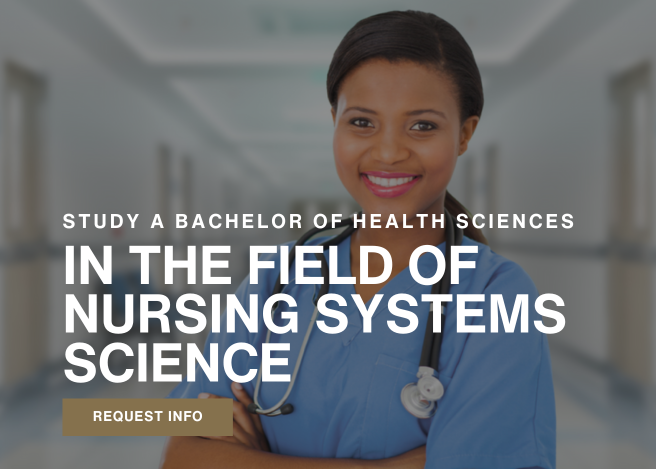
Nurses are the backbone of this future. They deliver the vast majority of care across the continent. However, to truly lead the transformation that Africa needs, nurses must move beyond clinical execution to systems design. The online Bachelor of Health Sciences in the field of Nursing Systems Science (BHSciNSS) from Wits University is the key to unlocking this potential, empowering nurses to build resilient, efficient and Africa-centric health systems.
The reality for many African nurses is one marked by shortages of staff, of medicine and of beds. Systems science shifts the focus from "what we lack" to "how we use what we have".
The Wits programme equips you with the tools of healthcare economics and quality management.
These are not just corporate buzzwords; they are survival skills for African clinics. You learn to eliminate waste in supply chains, optimise patient flow to reduce overcrowding and make evidence-based decisions on resource allocation. A nurse who understands economics can prove to a district health manager why investing in a community prevention programme is cheaper and more effective than treating acute complications in a hospital.
Africa’s disease profile is unique. We are managing HIV and TB while simultaneously facing an explosion of diabetes and hypertension. This requires a system that is agile and integrated.
Modules like Epidemiology of Infection and Disease Outbreak Management are critical for the African context. They prepare you not just to treat the patient in front of you, but to identify community-level patterns. You learn to design systems that can pivot quickly, such as using a chronic care clinic infrastructure to roll out an emergency vaccination drive. This systemic agility is the best defence against future pandemics.
In many parts of Africa, the "hospital" is too far away. The future lies in decentralised, community-based care.
The Coordinating Community Care module is essential for this shift. It teaches you to design patient pathways that extend deep into the community, leveraging community health workers and mobile technology. A systems nurse can design a workflow where a patient’s hypertension is monitored via SMS in a rural village, with escalation protocols that bring them to the clinic only when necessary. This protects the hospital from being overwhelmed and keeps the patient healthy at home.
Perhaps most importantly, the Wits BHSciNSS offers an education that is rooted in the African reality. Wits University is a leader in African research, and the curriculum reflects this context.
By studying online, nurses from across the continent can access this world-class education without leaving their communities. This creates a network of Pan-African leaders who share a common language of "systems improvement", ready to mentor the next generation and influence national health policies.
The future of nursing in Africa is not just about caring for the sick; it is about curing the system.
Yes. While the Healthcare Law module touches on South African legislation, the core principles of systems science, quality management, epidemiology and economics are universal. The challenges of resource constraints and disease burden are shared across the continent, making the skills highly transferable to healthcare systems in Kenya, Nigeria, Ghana and beyond.
Brain drain is when qualified people leave the country to seek opportunities and better pay in other countries. This often happens because nurses feel undervalued and see no career progression at home. This degree offers a pathway to advanced professional growth (management, policy or research) within the African context. It empowers nurses to become leaders and change-makers in their own countries, offering a compelling reason to stay and build the local system.
The programme includes modules on Microbial Diversity and Epidemiology of Infection. These modules provide the scientific framework to understand and manage infectious diseases prevalent in Africa, including malaria, TB, and HIV, from both a biological and a population-health perspective.
The Wits online platform is designed to be accessible. While you do need reliable internet access, the content is largely asynchronous and text/document-based (with some video). You can download materials when you have a connection and study offline. You do not need high-speed fibre to stream live lectures every day.
Achieving Universal Health Coverage across the globe is one of the World Health Organisation's Sustainable Development Goals for 2030 and it is particularly relevant in Africa. However, UHC fails if the system is inefficient (too expensive). Systems-trained nurses are the "engineers" of UHC. They ensure that the service delivery models are efficient enough to be affordable for the state, making universal access a reality rather than just a promise.

Wits.
For Good.

Learn what to expect when studying a Postgrad Diploma in Public Management online, including support, weekly workload and tips to succeed while working.
Read More
A practical guide to applying for an online Postgraduate Diploma in Public Management: steps, documents, timelines and what happens after you submit.
Read More
Understand the entry requirements for a Postgrad Diploma in Public Management, what you may need to apply and how to check if you qualify for online study.
Read MoreWits. For Good.