
How studying a Wits Postgrad Diploma in Public Management online works
Learn what to expect when studying a Postgrad Diploma in Public Management online, including support, weekly workload and tips to succeed while working.
Read More

For generations, nursing education focused primarily on the "micro" level of care: the bedside, the specific procedure and the individual patient. While this remains the heart of the profession, the modern healthcare environment has evolved into a complex, interconnected "macro" web of technologies, limited resources and policy constraints.
In this new reality, being a great nurse requires more than clinical hands-on skills; it requires systems thinking.
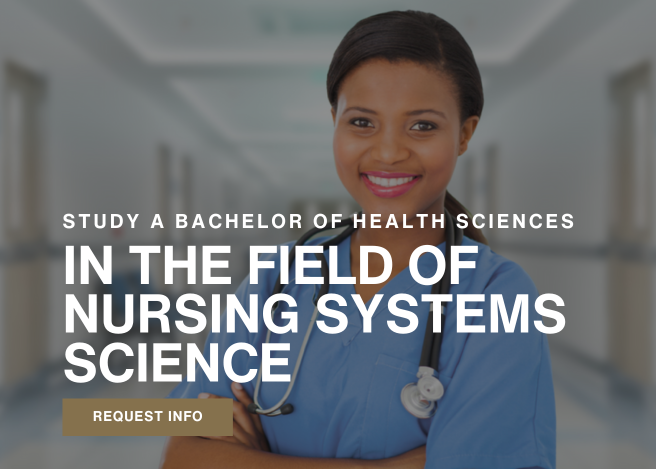
This is the core of nursing systems science, a discipline that equips nurses to understand not just how to treat a patient, but how the entire healthcare machine, from economics and law to community pathways, impacts that patient's outcome. The fully online Bachelor of Health Sciences in the field of Nursing Systems Science (BHSciNSS) from Wits University is designed to transition practising nurses into this advanced, strategic mindset.
Systems science views healthcare not as a collection of isolated events, but as a dynamic ecosystem. A "systems nurse" understands that a patient’s recovery is not just about the medication administered at 8am, it is influenced by:
By studying systems science, nurses move from being reactive (treating symptoms) to being proactive (designing better care environments).
As global healthcare systems face financial strain, the ability to manage resources is critical. The Wits programme includes modules on Healthcare Economics, teaching you to understand how scarce resources are allocated. This empowers you to make decisions that maximise health benefits for the entire population, moving you from a passive user of resources to a strategic steward of them.
Medical errors often stem from system failures, not individual negligence. Through modules like Quality Management in Healthcare and Patient Safety, the BHSciNSS trains you to identify systemic risks and implement quality improvement protocols. You learn to conduct clinical audits and design safety nets that prevent errors before they reach the patient.
The future of health is outside the hospital walls. The Coordinating Community Care module focuses on the seamless flow of patients to and from healthcare facilities. A systems-savvy nurse understands that a discharge is not the end of care but a transition to a community system. You gain the skills to coordinate these complex multi-disciplinary transitions, reducing readmission rates and ensuring long-term wellness.
The Wits BHSciNSS is a post-registration degree designed specifically for nurses who are already qualified (general, staff or auxiliary nurses) and want to deepen their academic and scientific knowledge.
It does not just repeat the clinical training you received at nursing college; it builds the scientific and theoretical scaffolding above it. With modules ranging from Healthcare Law and Policy to Evidence-Based Practice, it prepares you for roles in management, quality assurance and broader healthcare leadership.
By mastering systems science, you stop being just a cog in the machine. You become the engineer who helps run it, ensuring that the system works for the nurse, the hospital and most importantly, the patient.
It is important to distinguish between a nursing qualification and a degree for nurses. This is an academic degree (NQF Level 7) accredited by the Council on Higher Education (CHE). It is designed for nurses who are already registered with the South African Nursing Council (SANC). It does not lead to a new professional registration (like midwifery) with the SANC, but it upgrades your academic standing to a Bachelor's level, opening doors for postgraduate studies and management roles.
No. Because this programme is designed for professionals who are already practising nurses, there are no required clinical practical hours or "work-integrated learning" components. The focus is entirely on deepening your theoretical, scientific and systemic knowledge through online learning.
Yes. The programme is fully online and asynchronous, meaning there are no mandatory live lectures you must attend at specific times. You can access materials and complete assignments around your shift schedule. However, you should budget approximately 10 to 14 hours per week for study.
Graduates often move beyond bedside care into broader healthcare roles. These include unit management, quality assurance, infection control and public health programme management. It also qualifies you to apply for Honours degrees in fields other than clinical nursing, such as public health or health systems management.
Yes. The programme accepts general nurses, staff nurses and auxiliary (enrolled) nurses who hold a certificate or diploma and are registered with the regulatory body. Enrolled nurses must complete the full three-year programme, whereas nurses with a diploma may be eligible for credits for the first year.

Wits.
For Good.

Learn what to expect when studying a Postgrad Diploma in Public Management online, including support, weekly workload and tips to succeed while working.
Read More
A practical guide to applying for an online Postgraduate Diploma in Public Management: steps, documents, timelines and what happens after you submit.
Read More
Understand the entry requirements for a Postgrad Diploma in Public Management, what you may need to apply and how to check if you qualify for online study.
Read MoreWits. For Good.